
Messages
The ‘One Anothers’
Here is the message from last weekend from Clive Jackson on the ‘One Anothers’ of the New Testament:
This entry was posted in Messages and tagged Encourage one another, One Anothers, Pay for one another.
Daniel 2: the vision and interpretation
Dr Annang continues his study of Daniel, looking at the vision given to Nebuchadnezzar.
“The kingdoms of this world have become the kingdoms of our Lord and of His Christ, and He shall reign forever and ever!”Revelation 11:15.
“Kingdoms rise and kingdoms fall, but You go on.” October, U2.
This entry was posted in Messages and tagged Daniel, Nebuchadnezzar's vision of kingdoms.
Lessons from Purim for our times
The story of Esther is more than just a story, there are lessons to learn from it to help us here and now. (message begins at 03:00mins)
This entry was posted in Messages and tagged Esther, lessons from Purim, Purim.
Putting God’s Kingdom first
When we put God’s Kingdom and His righteousness first in our priorities and choices, we will be blessed! This is the message from January 21st (message begins at 2.30 mins).
Matthew 6:31-33:
“Therefore do not worry, saying, ‘What shall we eat?’ or ‘What shall we drink?’ or ‘What shall we wear?’ 32 For after all these things the Gentiles seek. For your heavenly Father knows that you need all these things. 33 But seek first the kingdom of God and His righteousness, and all these things shall be added to you.
This entry was posted in Messages and tagged Prioritising God's Kingdom, Putting God first, Seek first the Kingdom of God.
“What is that in your hand?”
Hear this anointed message from Ant Spitteler here:
Exodus 4: 1-5: Then Moses answered and said, “But suppose they will not believe me or listen to my voice; suppose they say, ‘The Lord has not appeared to you.’” 2 So the Lord said to him, “What is that in your hand?” He said, “A rod.” 3 And He said, “Cast it on the ground.” So he cast it on the ground, and it became a serpent; and Moses fled from it. 4 Then the Lord said to Moses, “Reach out your hand and take it by the tail” (and he reached out his hand and caught it, and it became a rod in his hand), 5 “that they may believe that the Lord God of their fathers, the God of Abraham, the God of Isaac, and the God of Jacob, has appeared to you.”
This entry was posted in Messages and tagged Being available to God, What is that in your hand?.
Behold I will do a new thing
God wants to do a new thing in our lives! He wants to make a way where there presently isn’t a way forward. He calls us to prepare the way, to remove the obstacles and ‘unkink the hosepipe’, so to speak, so His glory can flow through us. To enable that to happen, we must ‘seek first His Kingdom and His righteousness.
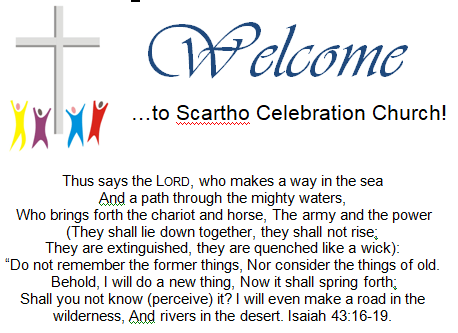
This entry was posted in Messages and tagged Putting God first, Way in the wilderness.
(Second ) Advent Sunday
Here is the audio of yesterday’s message. Israel is the fig tree Jesus told us to watch and understand in relation to His second coming. Israels restoration over the last seventy years is truly amazing, God at work in fulfilling His promises in Ezekiel 36 and 37. Events in the Middle East recently should awaken us to the subsequent prophecies of Ezekiel 38 and 39, events such as the recent alignment of Russia, Iran and Turkey, their presence in Syria and Iran’s continued threats to destroy Israel.
Here are some recommended links for further recent information and background study.
Middle East Update (with intel from IDF forces) Video from Major Amir Tsafati, (who served as Deputy Governor of Jericho and was part of the negotiating team which was tasked to turn over the area to the Palestinians. He is also an international speaker on terrorism.)
Joel Rosenberg: On the eve of Yom Kippur, “Putin in Ankara to forge alliance of Russia, Turkey & Iran.” Here’s why that’s interesting.
The Days of Ezekiel, Video. Amir Tsafati
A study of Ezekiel 38 and 39 by Derek Walker, Oxford Bible Church.
This entry was posted in Messages and tagged Ezekiel 38 and 39, Gog and Magog, Israel, Russia, Watch and pray.
Creation Sunday
Here are some brief and basic notes from this morning’s look at the case for Creation. The CD recording of both Glen and Steve’s testimonies, and the short message I brought, will be available next Sunday.
Andy.
We declare God is the Creator!! Hebs.11:3, Psalm 8 & Psalm 19. All the beautiful portrayals of Creation (such as Blue Planet) should give glory to the Creator, instead they rob Him of His glory by attributing the wonders of creation to a false god, the god of evolution (evolution requires faith to believe it!). Evolution is not provable, it is only a theory, yet it is consistently presented as fact in the media. The Biblical description of history (Creation, the Flood) clearly provide an alternative, credible account for how things are as they are.
There are many resources available on a wide variety of subjects, such as the flood, dinosaurs, carbon dating, fossils, millions of years etc, on the Answers in Genesis website.
This entry was posted in Messages and tagged Creation or evolution, end times deception, Foundations, watchman.
The Letter to the Colossians (8)
Advancing His Kingdom’s Order in a Disorderly World (Col 2:4-8)
Advancing the Kingdom of the Lord Jesus Christ in a Disorderly World
Introduction
The last time I was here we looked at Paul’s Prayer-plus in Col 2:1-5. Actually we only managed to look at 2:1-3. The prayer ends in 2:5 with the apostle’s expression of hope and belief in answered prayer: “For though I am absent in body, yet I am with you in spirit, rejoicing to see your good order and the firmness of your faith in Christ”. In other words, I am already anticipating, seeing and rejoice to behold the answer to my prayers. And what I am looking forward to see is “your good order and the firmness of your faith in Christ” (2:5). Read the rest of this entry »
This entry was posted in Messages.
The Letter to the Colossians (7)
Paul as Faithful Minister of the Kingdom (Part 1) Col 1:23b-2:5
Introduction
Our journey through Colossians brings us to the part in the Apostle’s letters in which he talks about himself. Here in Colossians 1, Paul does this for two reasons, one is to Enlighten the readers about his Ministry, and the second is to Embody His Message to the Colossians. Let me explain these two reasons a bit more. Read the rest of this entry »
This entry was posted in Messages and tagged Colossians.
- ← Previous
- 1
- …
- 39
- 40
- 41
- Next →
 Scartho Celebration Church